
Do Your Clothes Need Dry Cleaning?
12th November 2025
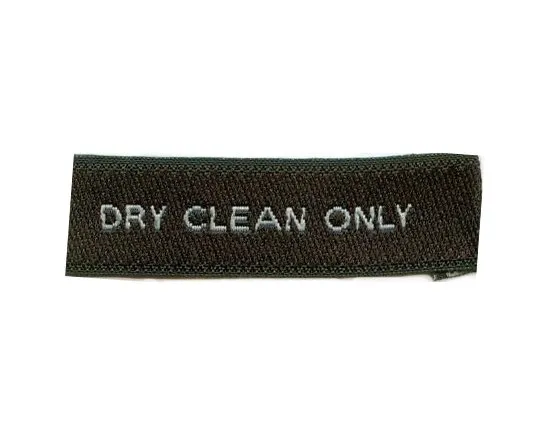
Most people meet “Dry Clean Only” as a warning, not a suggestion.
It reads like a legal line in the sand: water equals ruin. That fear didn’t come from physics so much as policy and habit. When U.S. care-label rules were written decades ago, brands were required to list a safe method, not every safe method. Testing every fabric, dye, interlining, and decorative trim under multiple cleaning processes is expensive. So manufacturers defaulted to a conservative instruction that minimizes their liability: “dry clean.” The tag protects the brand, but it can also keep consumers paying for a chemical process their clothes don’t actually need.
What “dry cleaning” really is—and why water shows up anyway
Dry cleaning isn’t dry; it replaces water with a solvent (historically perchloroethylene, often called “perc”) to dissolve oils.
Water, however, is unmatched at removing the stains people actually bring in—perspiration, coffee, wine, road salt, food residues.
That practical reality is why modern shops routinely use water—either before a solvent cycle to remove hydrophilic soils or, increasingly, as the primary cleaning method with professional wet-cleaning systems. In other words, much of what the public calls “dry cleaning” is already water-based cleaning plus expert finishing.
The rise of professional wet cleaning
Beginning in the 1990s, textile chemists and equipment makers developed “professional wet cleaning,” a process that uses carefully controlled water levels, low-mechanical-action cycles, biodegradable detergents, and tensioning/finishing equipment to preserve shape and dimensions. Demonstration projects and field studies found that cleaners could switch to wet cleaning for the overwhelming majority of “Dry Clean Only” items while maintaining equal or better quality.
A California Air Resources Board guide synthesizing multiple independent studies reports success rates exceeding 99% for shops that converted with proper gear and training. Peer-reviewed research likewise found wet cleaning to be a viable pollution-prevention alternative to perc with high operator satisfaction and garment quality.
This matters because the label conventions lag the science. Consumers still see “Dry Clean Only” on garments that, in practice, respond beautifully to water—when handled professionally and finished correctly.
Why so many tags still say “Dry Clean Only”
Three forces keep the "Dry Clean Only" tag alive.
First, legal risk: “dry clean” is the most conservative single instruction a brand can give, especially for mixed-media garments where one problematic trim, glue, or interfacing could misbehave in a home washer.
Second, standard inertia: care-label protocols were designed before wet cleaning matured, and relabeling supply chains is slow.
Third, communication: it’s simpler for a brand to over-warn than to educate consumers about nuance—“handle with care” doesn’t fit on a 2-inch tag.
The end result is a lot of conservative tags on clothes that are perfectly safe to clean with water in capable hands. (For readers who want a mainstream consumer take, Wirecutter has also urged caution about reflexive dry cleaning and highlighted when gentle washing is appropriate.)
Health and environmental context (why alternatives matter)
Beyond garment care, there is a public-health reason to favor water when appropriate. Perc—the legacy dry-cleaning solvent—is now recognized by the U.S. EPA as posing an “unreasonable risk,” with a federal plan to phase out its use in dry-cleaning machines and extensive documentation of neurological, liver, kidney, and cancer risks with chronic exposure.
Several outlets covered the policy path and underlying science in 2024–2025; the trend line is clear: reduce or eliminate perc, and expand safer alternatives. Consumers have relatively low exposure compared with workers, but choosing water when it works reduces solvent handling in your community.
What truly shouldn’t be wet-cleaned (and why)
There are real exceptions.
- Leather and suede aren’t “wash and hope” materials; their finishes and natural oils call for balms and brushing rather than immersion.
- Furs and down/feathers require specialized handling.
- A small subset of vintage garments with unstable dyes or aged adhesives can bleed or distort when rehydrated.
These cases exist—but they’re the minority.
For most modern fibers (cotton, wool, silk, linen, rayon/viscose, polyester and blends), controlled water processes are not just safe; they often yield superior hand feel, brightness, and odor removal compared with solvent methods. California Air Resources Board
The customer’s blind spot: you’re buying the finish, not the fluid
Ask ten people to define “dry cleaning,” and you’ll hear about the result: crisp seams, true color, smooth drape, a garment returned on a hanger in a bag. That visible craft—the pressing and shaping—is what most people value. The upstream chemistry is invisible.
Understanding this helps consumers make better choices: if a shop can deliver that professional finish using the least aggressive, most fabric-appropriate method (often water), that’s not corner-cutting—it’s good practice.
How to evaluate your own garments (simple, safe checks)
You don’t need a lab to make smarter decisions, just a conservative process:
-
Fiber first. Read the content label. Most everyday fibers and blends tolerate water when agitation, temperature, and chemistry are controlled. (Wool and silk do best with cool water, short cycles, and proper drying/finishing.)
-
Color/dye test. Dampen a white cloth and press on an inside seam for 10–15 seconds. If it picks up color, stop and seek a pro.
-
Construction check. Feel for glued interlinings, heavy embellishments, leather trim, or metal that could corrode. These call for professional care.
-
Dry the smart way. Air-dry flat or on a form. Most disasters come from heat and rough mechanical action, not water.
When in doubt, ask a cleaner who offers wet cleaning. They’ll assess fiber, dyes, trims, and structure, then choose the least aggressive method that achieves the result. (Multiple public guides and consumer resources now encourage cold-water methods for many items, reflecting this shift.)
A New Definition of Clean
To be “dry cleaned” once meant solvent, and clean solvent at that.
To be “professionally cleaned” today means:
- Stains removed intelligently
- Fibers preserved
- Fabrics finished beautifully
- Methods chosen for safety, not superstition
So next time you read Dry Clean Only, remember: It’s not a command—it’s a caution from another era.
Your clothes can handle water.
At Clean Shirt Co. Laundromat, we are your dry cleaning alternative. Our "White Glove" cleaning service is perfect for wedding dresses, dress shirts, suiting and just about anything else you'd normally take to an Eau Claire dry cleaners.
Clean Shirt Co.
1117 South Farwell St.
Eau Claire, WI 54701
(715) 215-2993
Open daily 6 am –11 pm
Latest Blog Posts
The UWEC Student's Guide to Laundry Day (Yes, It Can Be Easy)
Laundromat near UW-Eau Claire — a 4-min drive or 10-min walk from campus. Credit card-accepted machines, large loads for comforters, open from 6 AM until 11 PM daily. Always staffed. Everything Blugolds need to know about laundry day.
25th August 2026
White Glove Laundry Service in Eau Claire
Looking for a dry cleaning alternative in Eau Claire? Discover Clean Shirt Co.’s White Glove Laundry Service for dress shirts, dresses, formalwear, and uniforms.
5th August 2026
Dry Cleaners Eau Claire | Clean Shirt Co. White Glove Laundry Service
Searching for dry cleaners in Eau Claire? Clean Shirt Co. offers a dry cleaning-equivalent alternative with White Glove Laundry Service for dress shirts, dresses, wedding gowns, and formal garments. Drop-off ready in 3 business days or less.
4th August 2026
What We Wash in Our Drop-Off Laundry Service | Clean Shirt Co.
See what you can bring to Clean Shirt Co.’s wash-dry-fold drop-off laundry service in Eau Claire, including everyday clothes, towels, linens, and bedding, plus tips for best results.
2nd August 2026
What to Expect When You Drop Off Laundry at Clean Shirt Co.
Curious what happens after you drop off laundry? Clean Shirt Co. in Eau Claire explains exactly how our wash-dry-fold service works from check-in to pickup, so you know what to expect every time.
2nd August 2026